Climate Risk Assessment Methods for Coastal Tourism Regions and Destinations
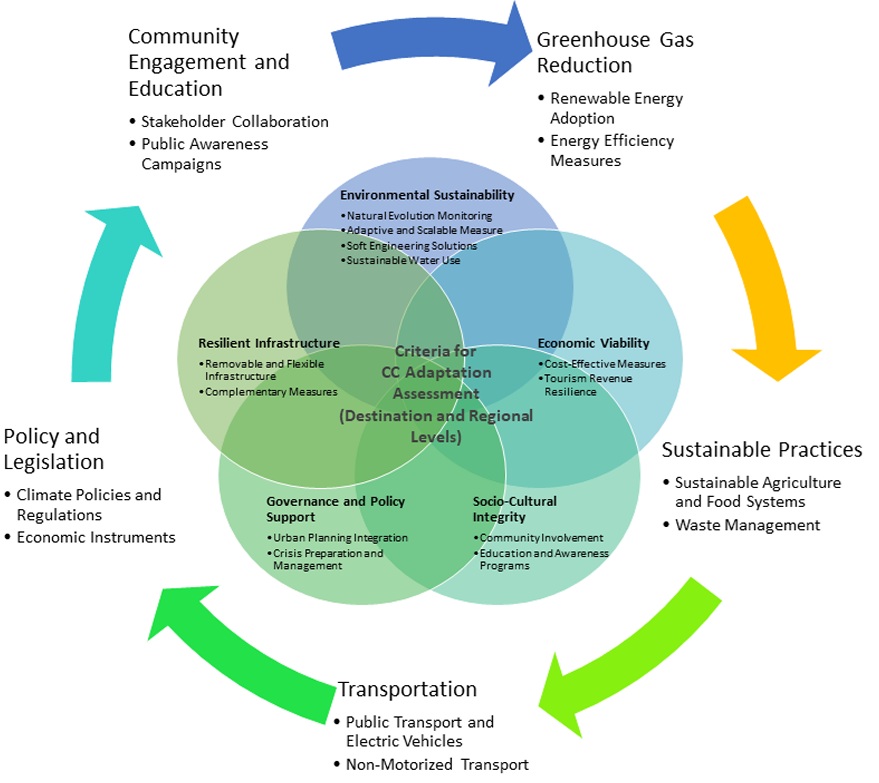
The document presents two methodological frameworks to identify and assess climate issues in coastal tourism areas at Regional and Destination level. Its purpose is to provide practical, evidence-based and step by step guidelines that enable Mediterranean regions and destinations to understand climate impacts, identify vulnerabilities, select appropriate criteria and indicators, and formulate effective climate action strategies. By incorporating ecosystem-based approaches, stakeholder engagement and structured assessment methods, the frameworks assist regions and destinations in strengthening resilience, sustainability, and climate-responsive tourism planning.
 click to view full size
 Implementation
Authorities and stakeholders use the methodological framework to conduct systematic evaluations of climate hazards, their levels of exposure and their sensitivity and their capacity to adapt. This is achieved by drawing on climate data, vulnerability mapping through GIS and the specific criteria and indicators that the project has established. When applied, the frameworks help regions and destinations make sense of climate-related risks, pinpoint where interventions are most needed and develop strategies for adaptation and mitigation that rely on ecosystem-based solutions. The tool is meant for use by Mediterranean coastal regions and tourism destinations that are under pressure from climate change and need reliable, methodologically sound tools to guide tourism planning that respond to climate challenges.
Replicability conditions
Replicability of the tool relies on the capacity of regions and destinations to sustain coherent analytical processes, ensure access to reliable climate and environmental information, and maintain governance arrangements that enable coordinated climate action. The framework can be adopted in settings where stakeholders can interpret climate information, putting the proposed criteria and indicators into practice and fostering communication among public authorities, tourism operators, scientific institutions and civil society groups. Transferring them successfully also requires the integration of ecosystem-based approaches, vulnerability mapping and evidence-informed decision-making within existing planning practices.