Emblematic MED-Routes transferability guidelines for the creation of eco itineraries
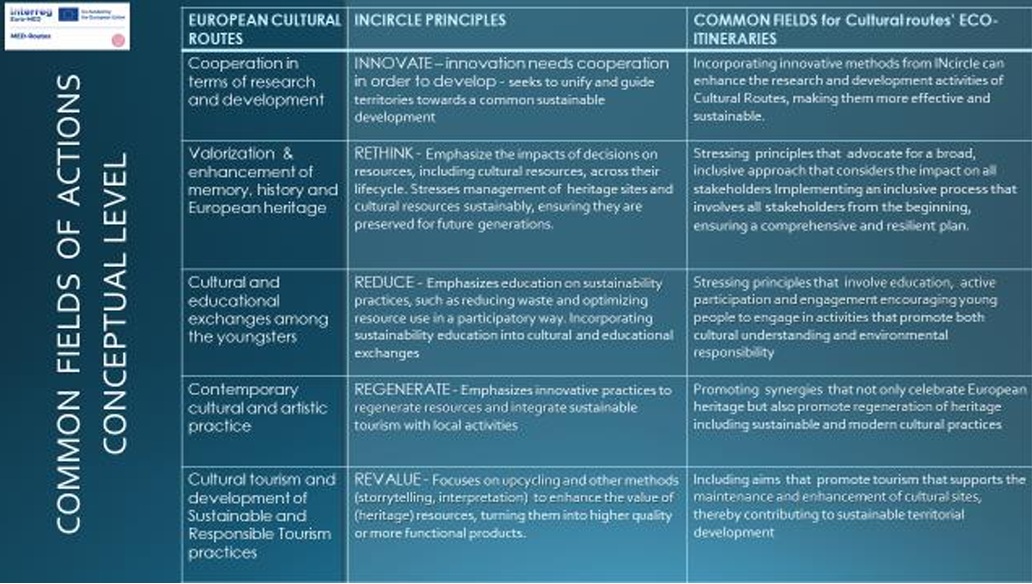
The MED-Routes transferability guidelines help destinations develop eco-itineraries, with a particular focus on DMOs and similar organizations working within European Cultural Routes across the Mediterranean. The guide walks through what's involved in designing, implementing, and monitoring these itineraries, building on work from the INCIRCLE and EMbleMatiC projects. It provides practical instructions and addresses common challenges along with potential solutions. The overall aim is to encourage a low-impact tourism that's grounded in cultural heritage, local identity, and the values that define the Mediterranean region.
 click to view full size
 Implementation
The tool is applied in pilot Mediterranean destinations through collaboration with local stakeholders and territorial actors. Implementation involves documenting both the tangible and intangible heritage of the area and mapping out existing tourism services, accommodation, catering, leisure activities and transport links. The resulting itinerary integrates the destination’s emblematic characteristics with sustainability principles and the common attributes defined by the MED-Routes approach. The tool is intended for Mediterranean destinations with a strong cultural identity, supporting the development of thematic routes grounded in heritage and slow-tourism values.
Replicability conditions
Replication requires the ability to involve local stakeholders, map cultural and natural heritage, identify existing services and infrastructure, and ensure legal accessibility of routes. It also depends on the capacity to implement physical elements such as signage, QR codes, digital maps, and interpretation tools, as well as to organize meetings, participatory labs, and communication activities. Effective replication requires procedures for monitoring, collecting feedback, training stakeholders, and updating the itinerary. Since the guide provides instructions, challenges, and practical tips, it can be applied by DMOs or similar entities within European Cultural Routes in Mediterranean areas.