NbS for Coastal Destinations Climate Action manual
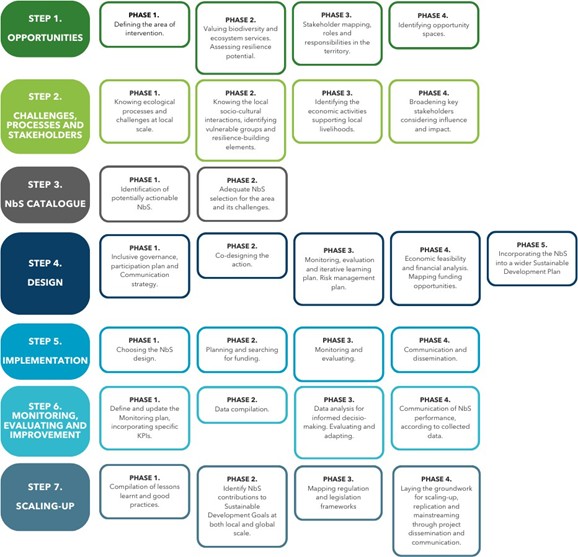
The document lays out a structured approach to guide the NaTour4CChange pilot destinations in designing, planning, implementing and monitoring Nature-based Solutions (NbS) as part of their efforts to address climate issues in tourism. The manual supports destinations in strengthening climate resilience through ecosystem-based adaptation approaches by facilitating the identification of local challenges, the assessment of ecological and socio-economic conditions and the selection of context-appropriate NbS. It applies the IUCN Global Standard for NbS to provide a structured framework, governance guidance and tools for co-design, monitoring, evaluation and scaling up. The manual functions both as a practical reference for the pilot sites and as a resource that can be taken up by other Mediterranean coastal destinations.
 click to view full size
 Implementation
The NbS Manual is applied through its incorporation into the planning processes of the seven pilot destinations, where it functions as a methodological reference for identifying opportunity areas, examining ecological and socio-cultural dynamics and selecting Nature-based Solutions (NbS) suited to the local context. It provides a structured framework for the design and implementation of NbS, organized around a series of analytical and participatory phases aligned with the IUCN Global Standard. This approach ensures that proposed interventions address local climate challenges while contributing to ecosystem performance and social equity. Through its use, destinations are supported in co-designing actions with stakeholders, identifying and allocating necessary resources, integrating NbS into wider sustainable development strategies and putting in place monitoring and adaptive management mechanisms that reinforce long-term climate resilience.
Replicability conditions
Replicability of the tool depends on the ability of destinations to maintain consistent analytical processes, interpret ecological and socio-economic information and sustain participatory governance structures that support inclusive decision-making. The manual can be adopted in places where local actors know how to work with the IUCN Global Standard, identify the challenges their communities face, evaluate what their ecosystems provide and make sure NbS fit with what they're trying to achieve locally. Transferability is further supported through iterative learning processes, transparent management of trade-offs, identification of funding streams to support the NbS in the long-term, and the integration of NbS within existing policy and planning frameworks.