Strategy for sustainable agricultural tourism in MED-GIAHS sites
The strategy provides a shared framework for guiding sustainable tourism development within Mediterranean Globally Important Agricultural Heritage Systems (GIAHS). It explains how tourism can support the safeguarding of agricultural heritage, traditional knowledge, and landscape values while enhancing local livelihoods and territorial resilience. By establishing common objectives and principles, it offers GIAHS territories a coherent reference for integrating tourism into broader heritage‑preservation and rural‑development processes. In this way, the strategy positions tourism as a mechanism that secures the long‑term viability of these socio‑ecological systems and strengthens their capacity to respond to contemporary environmental and socio‑economic challenges.
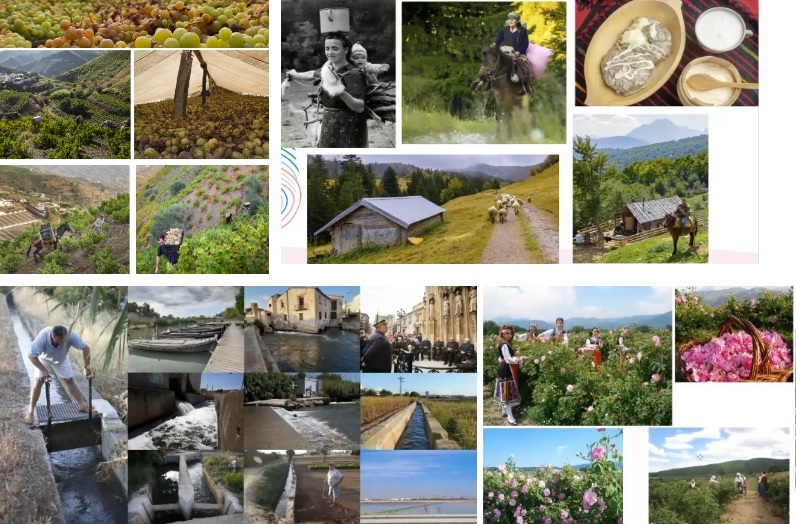 click to view full size
 Implementation
Mediterranean GIAHS territories use their conceptual framework to orient their tourism development toward the preservation and valorization of agricultural heritage systems. The strategy guides destinations in interpreting their landscapes, traditional practices, and community knowledge as foundations for sustainable tourism models that reinforce heritage conservation. It is addressed to GIAHS territories seeking to integrate tourism within broader heritage‑preservation and rural‑development objectives, particularly those aiming to strengthen resilience against climate pressures, socio‑economic decline, and the erosion of traditional agricultural systems. This strategic framework was validated through participatory workshops and technical exchanges within the MED-GIAHS pilot areas, ensuring its local relevance and scalability.
Policy Hubs
Target Groups
Replicability conditions
Replicability of the strategy depends on the ability of GIAHS territories to make their guiding principles their own, incorporate them into local governance, and integrate them into long-term territorial planning. Effective transfer requires a capacity to interpret agricultural heritage as a strategic asset, maintain coherence between tourism development and heritage‑preservation objectives, and sustain participatory processes that reflect community values. Replication is further supported when destinations can adapt the strategy’s conceptual foundations to their specific socio‑ecological contexts, ensuring continuity between local identity, landscape care, and sustainable tourism pathways.