Blueprint for Tourism climate action plans
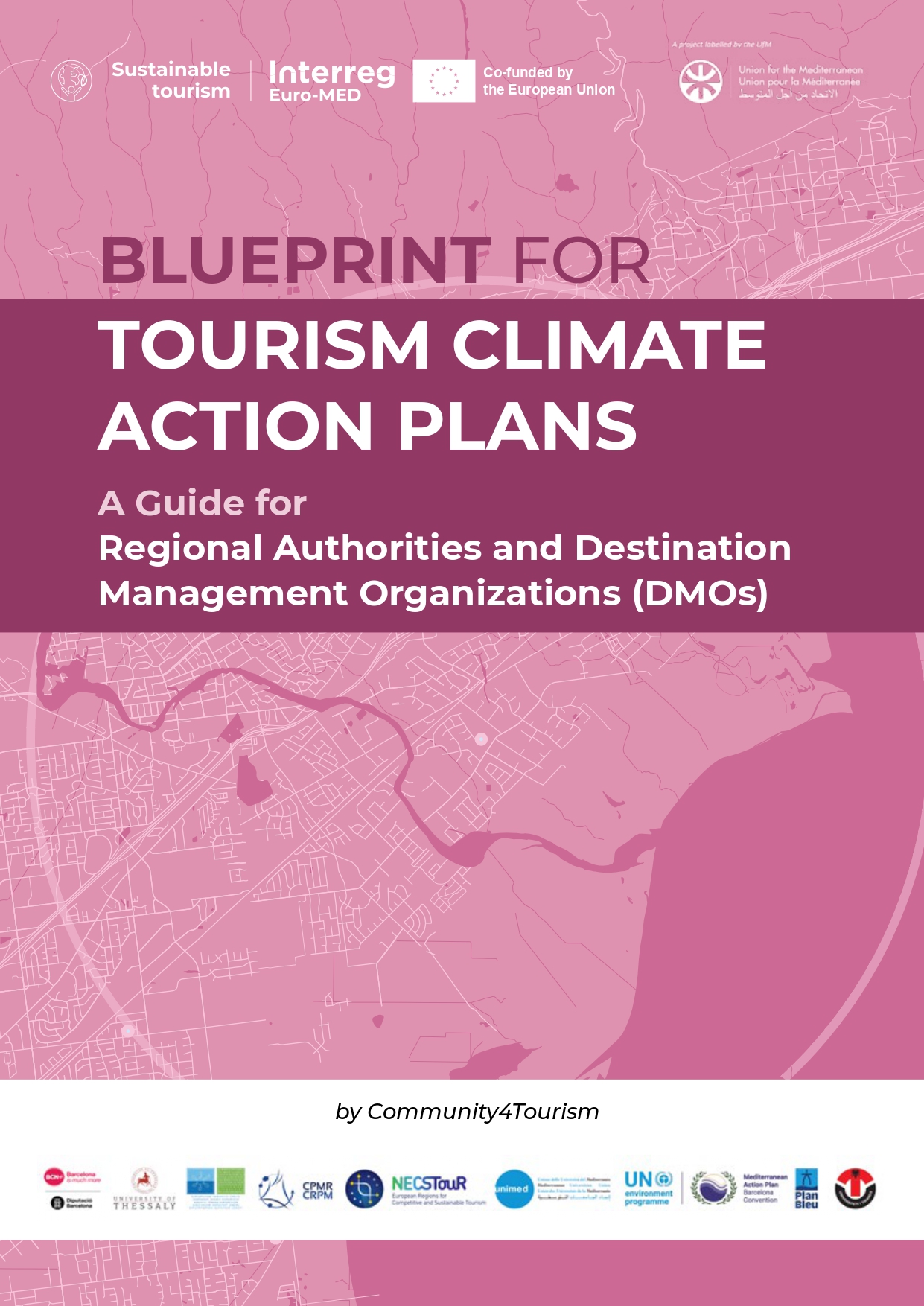
The Blueprint for developing Tourism Climate Action Plans, aimed at Regional Authorities and Destination Management Organizations (DMOs), particularly in the Mediterranean. It explains why climate action plans are necessary, highlighting climate risks, regulatory requirements, and collaboration opportunities. It outlines key principles such as adaptability and systemic approaches, and details the step-by-step process for creating a plan, including preparation, action selection, funding, and monitoring.
 click to view full size
 Implementation
The implementation of the action plan follows key steps: identifying and engaging stakeholders, setting clear objectives and actions within five pathways (Measure, Decarbonize, Regenerate, Collaborate, and Finance), prioritizing initiatives based on impact and feasibility, monitoring progress through defined performance indicators, and continuously improving the plan based on feedback and evolving challenges. The framework aligns with the Glasgow Declaration, emphasizing emission reduction in tourism, sustainable mobility, and support for local economies. The action plan is flexible and can be adopted by any DMO or regional authority across the Mediterranean.
As environmental and social pressures increase, strengthening climate credentials and preserving natural habitats become urgent priorities at the core of the EU's sustainable tourism agenda and the European Green Deal. To support this, the EU Climate Action Academy highlights 5 resources, including the Blueprint for Tourism Climate Action Plans , a practical guide for destinations and DMOs to accelerate their transition.
Replicability conditions
Provides guiding principles and adaptable frameworks that can be applied to different regions beyond the Mediterranean. It emphasizes flexibility, collaboration, and alignment with global frameworks like the Glasgow Declaration, which suggests that the strategies can be replicated in other contexts with proper adjustments.