Up-scaled DMSS tool
This tool supports decision-making across coastal, maritime and inland destinations by integrating environmental, socio-economic and spatial data within a unified platform. Authorities, policymakers and stakeholders can leverage it to assess risks, evaluate alternative scenarios and identify sustainable management approaches through analytical outputs and visual representations. It examines what data is available from partner destinations and organizes these datasets to meet the practical needs of those engaged in tourism policy and destination management. The report further establishes a modular architecture that aligns system capabilities with user needs, creating a foundation for data-informed services in destination planning.
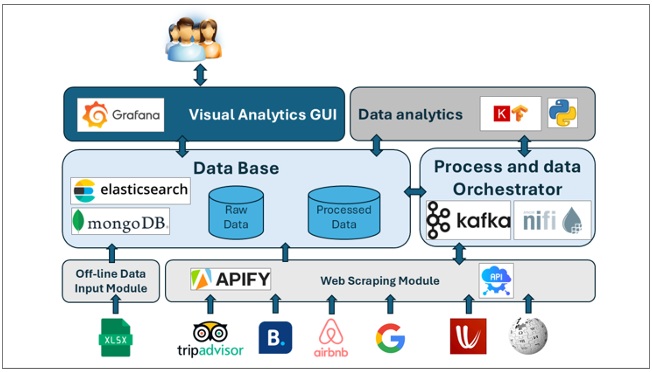 click to view full size
 Implementation
The up-scaled DMSS addresses tourism pressure and supports sustainable tourism development. Partners bring together integrated data on seasonal tourist numbers, mobility patterns and indicators of tourism pressure within the system. Using this information, the DMSS provides consolidated data and analytical outputs to stakeholders, who can then produce scenario comparisons that illustrate the potential effects of various coastal protection measures, visitor flow regulations, modifying transport options, ecosystem condition and local economic activity. This approach enables decision-makers to choose strategies that balance the protection of natural resources with the continuation of viable tourism operations. The tool can support services for coastal and nature-based destinations that experience environmental stress from tourism activities, climate-related hazards, or conflicting demands on land use, while also being applicable across a broader range of territorial contexts.
Replicability conditions
Replication of the DMSS requires basic technical and data management capacity, stable internet connectivity and access to local or regional tourism and sustainability data. Consideration must also be given to the costs associated with data acquisition, including potential licensing fees, data-sharing agreements, or expenses related to data collection and preparation, as these can significantly influence the feasibility of replication. Effective implementation also depends on cooperation between public authorities and tourism stakeholders, as well as a basic level of digital readiness within destination management organizations to support adoption and long-term use. Adequate allocation of human resources for system maintenance, user support, and continuous stakeholder engagement is also recommended to ensure sustained functionality and uptake.