Catalogue of the solutions
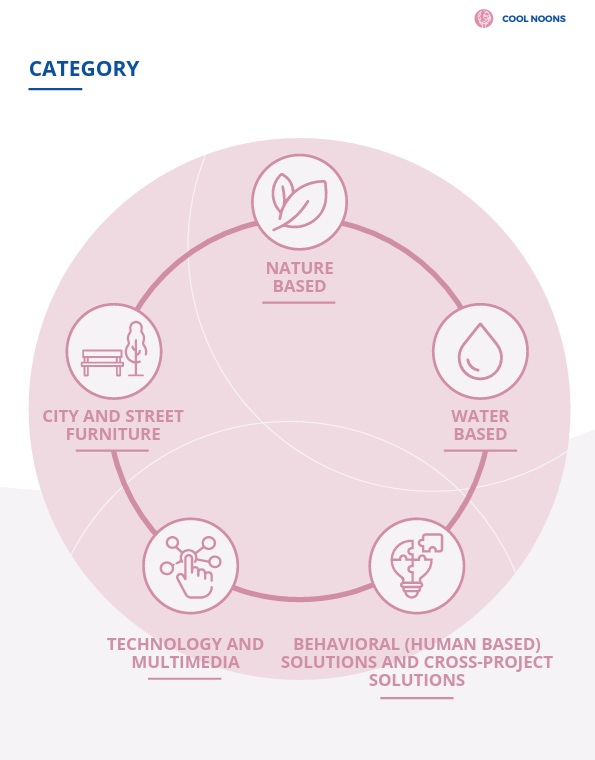
Catalogue of the Solutions serves as a growing collection of climate‑adaptation measures that have been chosen for testing across five pilot cities: Budva, Dubrovnik, Imola, Marseille and Lisbon. It aims to bring together the solutions that emerged from project workshops and co-creation sessions with residents and local stakeholders and present them in a structured format. Partners can use the catalogue to compare different options, get a sense of what impact they might have and get ready to put them into practice. By recording nature-based, water-based, technological, behavioral and cross-project solutions, it helps inform decisions based on evidence and provides the foundation for evaluating the effectiveness and transferability of the tested interventions. It also acts as a knowledge resource that can be transferred to other contexts, helping Mediterranean cities that are dealing with similar heat-related problems plan their own adaptation efforts.
 click to view full size
 Implementation
Implementation of the Catalogue of the Solutions exists when destinations fold it into their decision-making as they work to identify and prioritize climate‑adaptation measures. The catalogue works as an analytical reference point that lets destinations look through a curated set of interventions, evaluate how relevant they are to the climate pressures and bring them into line with the planning objectives. By laying out a structured overview of nature-based, water-based, technological and behavioral options, the catalogue helps destinations pick measures that match their environmental conditions, how their space is organized and what they need in terms of adaptation. It's aimed at Mediterranean cities that are experiencing heat stress, especially those looking for structured, evidence-based guidance to weigh up and prioritize adaptation measures in complicated urban environments. It is knowledge-sharing tool, proposing a ready-to-use benchmark for any Mediterranean city that is willing to adapt its urbanity to rising temperatures.
Replicability conditions
Replicability of the catalogue depends on cities being able to maintain coherent analytical processes, make sense of climate-related evidence and work adaptation measures into the existing governance and planning frameworks. Effective transfer requires cities to be able to situate the solutions within their own climatic conditions, spatial context and policy goals, making sure that selected measures fit with their broader strategies for urban resilience. Replication is also supported by arrangements that encourage citizenship participation, coordination across departments, dialogue among stakeholders and learning through iteration, allowing cities to tailor the catalogue's content to their environmental and socio-economic circumstances while keeping the methodology consistent.