Guidelines for the creation of a cycling tourism offer
The tools provides recommendations on how to develop cycling tourism products in a sustainable way, particularly in long and medium distance cycling tourism routes that involve different regions and countries. Fostering cycling tourism helps developing sustainable and low impact tourism products, promoting collaborations among different territorial actors, developing complementary activities, while offering new services to residents and supporting local economies. The guidelines consist of 3 documents: Policy recommendations to improve the cycling tourism impacts; a Charter for Sustainable and Responsible Tourism in the MED Area; and a Long-term Management Agreement, in order to ensure and extend the cooperation between the territories and the project.
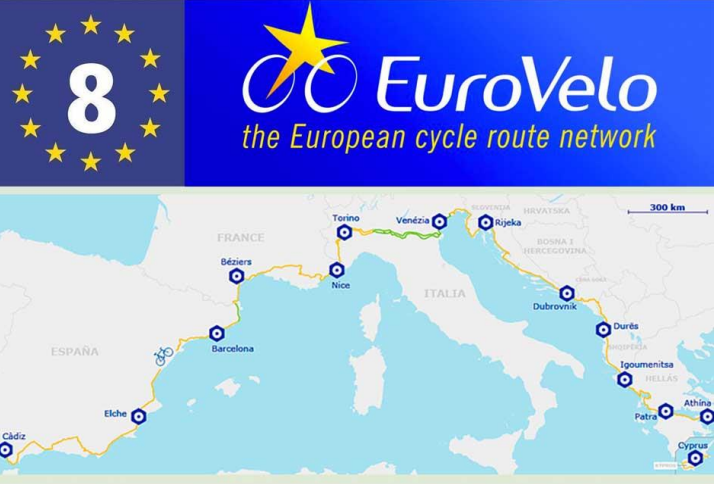 click to view full size
 Implementation
The guidelines are targeted to destinations that count on cycling itineraries and are interested in promoting medium and long distance cycling tourism itineraries as an alternative to their current tourism offer. The guidelines are a direct result of the implementation of the Project MEDCYCLETOUR focused on EuroVelo 8 - Mediterranean Route, a cycling itinerary of almost 6.000 km through 7 EU countries: Spain, France, Italy, Croatia, Slovenia, Greece and Cyprus, and 3 candidate countries: BosniaHerzegovina, Montenegro and Albania. Together the guidelines identified the plans, policies, tools and methodologies that are key to increase the influence of the cycling tourism product and improve its implementation at the regional and country level.
Replicability conditions
The Policy recommendations and the Charter are deliberately designed to be replicable throughout the MED Region. Meanwhile, the Long-Term Management Agreement (LTMA) builds on the MEDCYCLETOUR project and specifically relates to the itinerary of EuroVelo 8. The LTMA is necessary to further develop the route on both national and transnational levels. The agreement focuses on different issues, such as the routes infrastructure, services, marketing and communication, monitoring and impact assessment. Some countries/regions along the route are not yet represented in the LTMA and the partnership is looking for additional members.