Mainstreaming model
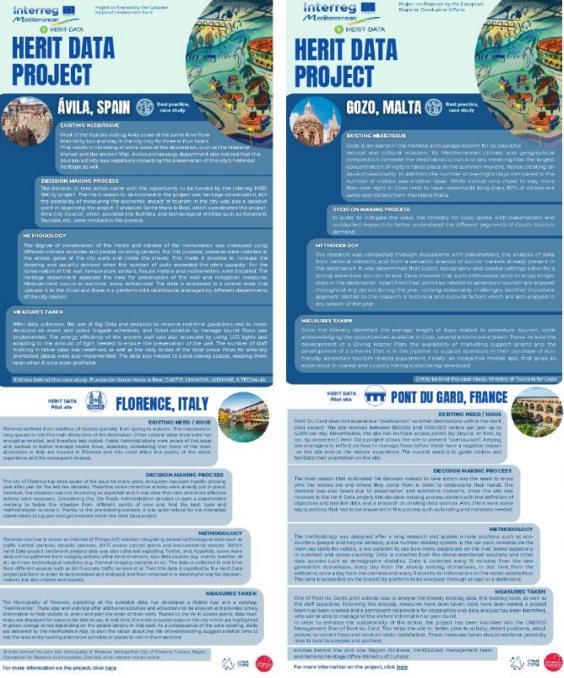
The model is a joint methodology to showcase, transfer and mainstream the results of the project in other regional, national, or supra-regional strategies, plans and policies. The document collects experiences from the 6 Herit-Data pilot sites, but also success stories from other projects/initiatives to better manage or anticipate tourism flows through the use of innovative solutions, Big and Open Data. It builds up on those experiences to provide applicable models on the implementation of tested tools/methodologies per typologies of sites (old city centre, heritage sites, monuments, and ports).
 click to view full size
 Implementation
The implementation of the model requires the pre-identification of results and best practices to be showcased as well as the target groups to reach. Tested technological tools/methodologies in the 6 Herit Data project pilot sites and 5 external initiatives/projects were identified. Answering to several key questions could facilitate the process of gathering relevant cases:
• What was the problem?
• How was the decision-making process?
• What was the methodology implemented?
• What actions were taken as a result?
For greater effectiveness, the mainstreaming model was disseminated through an advocacy campaign using different social networks and key messages depending on the targeted stakeholders (local, regional, and national public authorities, DMO’s, European Institutions, heritage sites, ports, natural sites and monuments’ managing entities, interest groups, researchers and higher education bodies, tech companies, sectoral associations, SMEs and local communities).
View related best practice
Replicability conditions
The mainstreaming model aims to propose a set of criteria and references to help in the process of identification and transferring of the tools for a customized replicability approach. No infrastructure or software is needed for the model itself, but the projects/initiatives presented should ideally include relevant and essential information for easy replication. Furthermore, the signature of the Herit-Data Memorandum of Understanding by organisations interested in replicating/using its methodology and tools should allow them to have privileged training and additional information on the latter and possibly to position themselves on other funding opportunities to continue the efforts undertaken by the project.